
Laser and light
Laye Dermatology uses state of the art laser and light technology made by Sciton in Silicon Valley which is known for its history as a centre for technological innovation. While many laser devices are available on the market, their quality and the outcomes they deliver can vary widely.
As part of your laser and light treatments, Laye Dermatology uses state of the art photographic software that allows 3D reconstruction with accurate geometry and remarkable image quality. The 3D photographic software allows assessment such as skin redness, pigmentation, pore size, texture and laxity. This allows demonstration of change over time after treatments with light or laser therapies. Our team at Laye Dermatology will take baseline photographs of the areas to be treated and additional follow up photography.
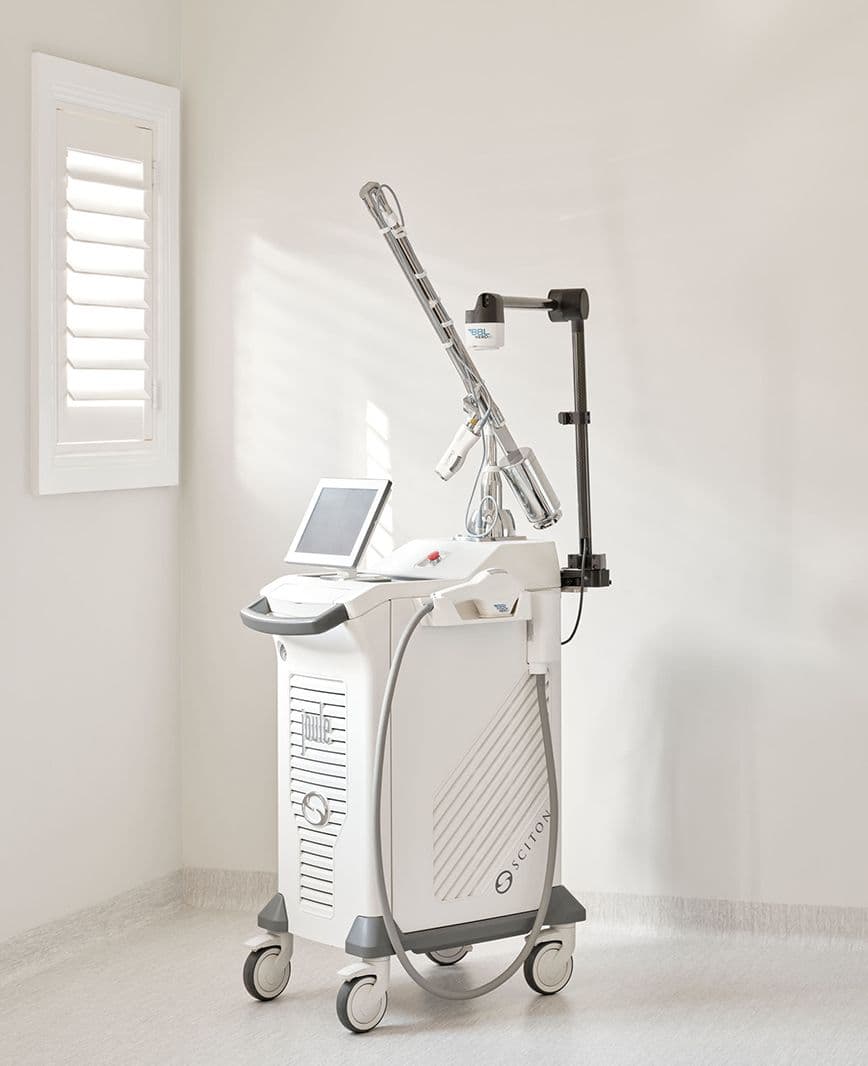
HEROic Broadband Light (BBL)
HEROic BBL energy can be used to treat the following conditions:
- Rosacea
- Acne
- Solar lentigines (brown sun spots)
- Telangiectasia (small facial veins)
- Angiomas (proliferation of blood vessels) such as spider naevi or cherry angiomas.
- Poikiloderma of Civatte
- Redness in scars
How does HEROic BBL work?
HEROic BBL is the world’s first energy-based device where AI ensures your treatment is accurately performed. This leads to better results and patient safety than standard IPL (intense pulsed light) machines. The light or heat that is released from the HEROic BBL which strikes the target tissue is more attracted to certain chromophores or skin pigments. There are basically three chromophores in the skin which are targets when treating with HEROic BBL; haemoglobin (redness), melanin (brown) and water. The aim of HEROic BBL treatment is reduction and improvement of redness and/or pigmentation.
You should feel mild discomfort during treatment as the HEROic BBL handpiece gently glides across the skin. A sapphire tip of the HEROic BBL applicator keeps the skin cool and comfortable throughout the treatment. Afterward, most patients will continue to feel warm for 30 to 60 minutes.
You will require multiple treatment sessions depending on how much redness and pigmentation you have in your skin. Your doctor will advise you on how many treatments are required.
Each HEROic BBL treatment is generally performed every 4-6 weeks.
Vascular Laser
Vascular laser can be used to treat the following conditions:
- Rosacea
- Acne
- Poikiloderma of Civatte
- Port Wine Stains
- Cherry angiomas
- Spider angiomas
- Venous lakes
- Fine lines
- Appearance of pores
- Uneven skin texture
- Scars
How does the Vascular Laser work?
The vascular laser selectively targets haemoglobin and deposits heat into blood vessels. This heat increases the temperature of the blood that is flowing through the blood vessel. This in turn will heat the blood vessel wall causing it to collapse. The heating of the small vessels can also induce an inflammatory response causing the release of mediators that stimulate fibroblast cell activity and the body’s natural repair process resulting in collagen production.
You may require multiple treatment sessions depending on how much redness and fine lines you have on your skin. Your doctor will advise you on how many treatments are required.
Each vascular laser treatment is generally performed every 4 weeks.
SuperMOXI Fractional Laser
The SuperMOXI Fractional Laser is used for the treatment of:
- UVR damage – actinic keratoses also known as sunspots
- Pigmentation
- Dull skin tone
- Melasma
The SuperMOXI laser can be used to treat all areas of the body including the face, neck, chest, arms, forearms and hands for full body revitalisation.
How does the SuperMOXI Fractional Laser work?
The SuperMOXI Fractional Laser creates columns of injury to the skin called microscopic thermal zones (MTZs) of non-ablated tissue. This causes peeling of the outer layer of the skin called the epidermis and coagulates (heats) the collagen in the second layer of the skin called the dermis.
The SuperMOXI targets the appearance of superficial pigment, enhances skin luminosity, and delivers a refreshed glow that patients notice right away.
HALO Tribrid Fractional Laser
The HALO Tribrid Fractional Laser is the world’s first triple wavelength resurfacing laser. This means the machine incorporates three different lasers simultaneously in one treatment session. The HALO Tribrid Fractional Laser is used for the treatment of:
- UVR damage – actinic keratoses also known as sunspots
- Pigmentation
- Dull skin tone
- Enlarged pores
- Scars including acne scars
- Fine lines
The HALO Tribrid Fractional Laser can be used to treat the face, neck, chest and hands.
How does the HALO Tribrid Fractional Laser work?
The HALO Tribrid Fractional Laser creates columns of injury to the skin called microscopic thermal zones (MTZs). This causes ablation (peeling) of the outer layer of the skin called the epidermis and coagulates (heats) the collagen in the second layer of the skin called the dermis. This process has two effects:
- Expels the sun damaged cells in the epidermis.
- Activates a molecule called Activator Protein 1 (AP-1) transcription factor which leads to upregulation of matrix metalloproteinase (MMPs) which stimulates collagen remodelling.
The HALO Tribrid Fractional Laser improves skin texture, reduces visible imperfections, enhances skin luminosity, delivers a fresh glow and provides deep dermal renewal for improvement of fine lines.
Erbium Yag Laser
The Ablative Erbium-Yag laser is a fully ablative laser that precisely removes layers of the skin. It incorporates the Nanolaser Peel, Microlaser Peel and Deep Resurfacing laser. It is used for the treatment of:
- UVR damage to the skin called actinic keratoses also known as sunspots
- UVR damage to the lip called actinic cheilitis
- Seborrhoeic keratoses also known as pigmented spots
- Debulking of benign tumours
- Scars
- Warts
- Rhytides (lines)
- Enlarged pores
How does the Ablative Erbium-Yag laser work?
The Ablative Erbium-Yag laser fully ablates (peels) the skin from the outer layer of the skin called the epidermis to the deeper layer of the skin called the dermis. The Ablative Erbium-Yag laser also has the ability to coagulate (heat) the collagen in the dermis. This process has two effects:
- Expels the sun damaged cells in the epidermis and dermis.
- Activates a molecule called Activator Protein 1 (AP-1) transcription factor which leads to upregulation of matrix metalloproteinase (MMPs) which stimulates collagen remodelling.
Profractional Erbium Yag Laser
The Profractional laser is an ablative fractional laser. It is used for the treatment of:
- UVR damage – actinic keratoses also known as sunspots
- Scars
- Rhytides (lines)
- Enlarged pores
How does the Profractional laser work?
The Profractional laser creates columns of injury to the skin called microscopic treatment zones (MTZs) covering a fraction of the total surface area. This causes ablation (peeling) of the skin from the outer layer of the skin called the epidermis to the deeper layer of the skin called the dermis. The Profractional laser also has the ability to coagulate (heat) the collagen in the dermis. This process has two effects:
- Expels the sun damaged cells in the epidermis and dermis.
- Activates a molecule called Activator Protein 1 (AP-1) transcription factor which leads to upregulation of matrix metalloproteinase (MMPs) which stimulates collagen remodelling.